
|
|
| Date | Title | |
| Tuesday 26 September 2023 | Autumn Meeting for Teachers of Chemistry. "THE CHEMISTRY OF CHEESE" Cheese and Wine (and soft drinks) Teachers CPD Meeting, including WMCTC Annual Business Meeting. | Details |
| Tuesday 3 October 2023 | "MENDELEEV'S GIFT TO EVERYONE (INCLUDING YOU AND ME)" Sixth Form Lecture | Details |
| Tuesday 17 October 2023 | "THE CHEMICAL ENGINEERING OF CHOCOLATE" Sixth Form Lecture | Details |
| Tuesday 7 November 2023 | "URANIUM: THE BOGEYMAN OF THE PERIODIC TABLE: A CASE OF DR JEKYLL OR MR HYDE" Sixth Form Lecture | Details |
| Tuesday 21 November 2023 | "REDESIGNING THE WORLD OF PLASTICS" Sixth Form Lecture | Details |
| Tuesday 5 December 2023 | "THE WONDERS OF ELEMENT 6:CARBON" Sixth Form Lecture | Details |
| Tuesday 16 January 2024 | "THE CHEMISTRY OF NUCLEAR WASTE AND THE ENVIRONMENT" | Details |
| Tuesday 30 January 2024 7pm (Sixth form Lecture) The P F Frankland Memorial Lecture |
"Discovering New Medicines: The Role of the Chemist" | Details |
| Tuesday 27 February 2024 | "A-LEVEL REVISION: MATHEMATICS IN SIXTH FORM CHEMISTRY: BUILDING CONFIDENCE" Sixth Form Lecture | Details |
| Tuesday 19 March 2024 | WMCTC CHEMISTRY QUIZ (See QUIZ tab) Year 10 and Year 11 | |
| Tuesday 16 April 2024 | Sixth Form Revision Lecture CANCELLED | |
| Tuesday 23 April 2024 | Sixth Form Revision Lecture CANCELLED |
|
Venue King Edward VI Camp Hill School for Girls, Vicarage Road, Kings Heath, Birmingham, B14 7QJ  Dr Simon Cotton will explain what are the small molecules that give cheese a smell and flavour, and how these molecules are formed in the cheese. Tasting of different cheeses will take place as the molecules are discussed. Many of these molecules are A level material. Dr Cotton will describe the enzymatic reactions that decompose molecules found in the raw material of cheese - casein, lactose, and milk fat. Dr Simon Cotton is an honorary Senior Lecturer in Chemistry at the University of Birmingham. He is a former schoolteacher and has written several books, including 'Every Molecule Tells a Story'. He regularly writes for 'Molecules of the Month' and for 'Chemistry Review' and has appeared on both radio and TV. The WMCTC Annual Business Meeting takes place during the evening and the agenda includes the election of teacher representatives to serve on the committee - an excellent CPD opportunity. All teacher input is very welcome and appreciated. If you would like to come to this meeting please email the WMCTC Chair (Jill Oldfield) (wmctcchair@gmail.com) giving your name and school. |
|
"Mendeleev's Gift to Everyone (including you and me)"  Professor Sir Martyn Poliakoff, University of Nottingham Tickets needed - Teachers should email the WMCTC Chair (Jill Oldfield) (wmctcchair@gmail.com) giving your name and school and the number of tickets required. |
|
"CHEMICAL ENGINEERING OF CHOCOLATE" 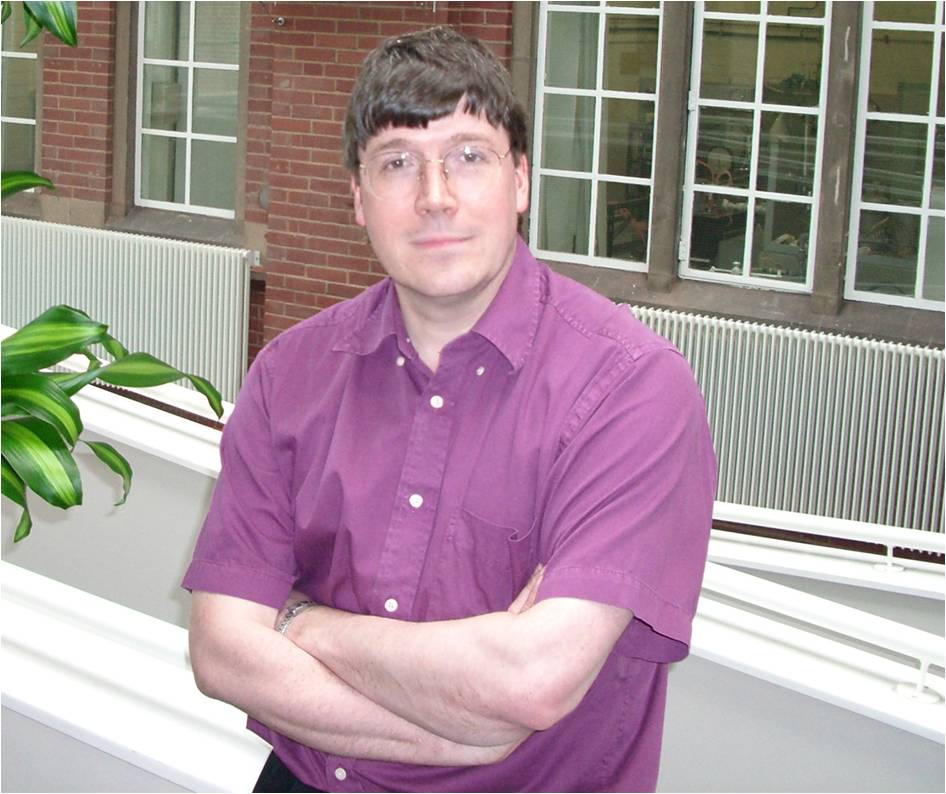 Professor Peter Fryer, University of Birmingham. Chocoholics beware - is this the time to diet and watch the calories? Let others indulge? Professor Peter Fryer is interested in food manufacture and food processes. His work applies the principles of Chemical Engineering to the problems of the food industry. Professor Peter Fryer, School of Chemical Engineering, University of Birmingham Sixth Form Lecture. Tickets needed - Teachers should email the WMCTC Chair (Jill Oldfield) (wmctcchair@gmail.com) giving your name and school and the number of tickets required. TOP of PAGE |
|
"URANIUM: THE BOGEYMAN OF THE PERIODIC TABLE: A CASE OF DR JEKYLL OR MR HYDE" Professor Stephen T. Liddle, University of Manchester. 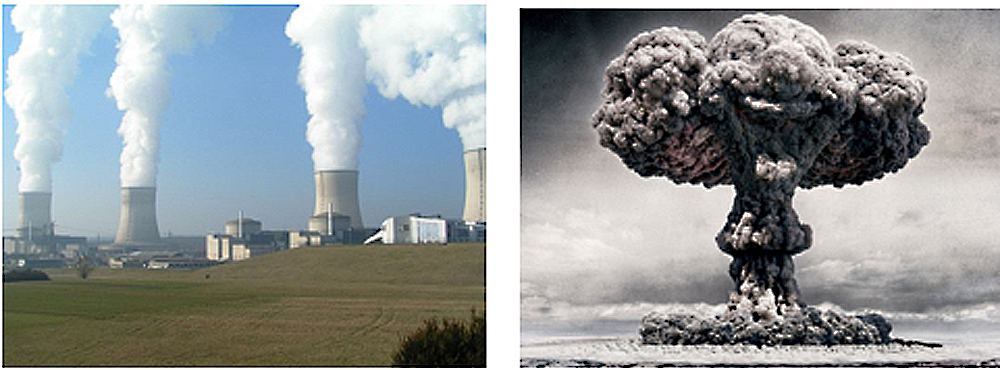 Nuclear. What an emotive word. For or against, we already have legacy issues from nuclear power and weapons and there'll be more in the future. Most nuclear applications use uranium, so we will attempt to unpick this complex area and present some facts about uranium and the science that is done with it. Professor Liddle is interested in developing the chemistry of main group and lanthanide and actinide complexes which challenge preconceived ideas about structure, bonding and reactivity. Tickets needed - Teachers should email the WMCTC Chair (Jill Oldfield) (wmctcchair@gmail.com) giving your name and school and the number of tickets required. TOP of PAGE |
|
"Redesigning the World of Plastics" 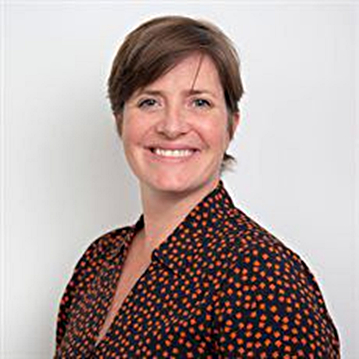 Professor Rachel O'Reilly, University of Birmingham. Rachel O'Reilly is currently a Professor of Chemistry and Head of School at the University of Birmingham. She was born and educated in Northern Ireland and got her first degree from the University of Cambridge in 1999 and went on to complete her PhD at Imperial College, London in 2003 with Professor Vernon Gibson. She then moved to the US to work with IBM and Washington University in St Louis. In 2006 she returned to the UK and took up a position at the University of Cambridge and then in 2009 she moved to the University of Warwick and in 2012 was promoted to full professor. She moved to Birmingham in 2018. Her group undertakes research in the area of catalysis, responsive polymers, nanostructure characterization and DNA nanomaterials. She has published over 200 papers to date and graduated over 30 PhD students. ty. (wmctcchair@gmail.com) giving your name and school and the number of tickets required. |
|
"THE WONDERS OF ELEMENT 6:CARBON" Professor Julie McPherson, University of Warwick. Our speaker, Julie MacPherson works on the development of new electrochemical-based sensors (based on diamond, nanotubes, graphene and nanoparticles) for a variety of different applications in healthcare, pharmaceutical analysis and environmental science (often in collaboration with industry). Tickets needed - Teachers should email the WMCTC Chair (Jill Oldfield) (wmctcchair@gmail.com) giving your name and school and the number of tickets required. |
|
"THE CHEMISTRY OF NUCLEAR WASTE AND THE ENVIRONMENT" 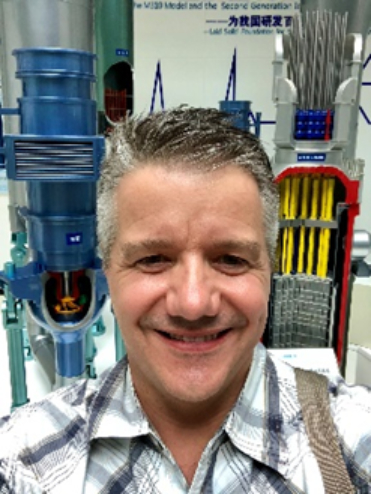 Dr Mark S. D. Read, NWS and University of Birmingham Mark will also highlight the important role of the chemist in preparing Environmental Safety Cases to satisfy environmental and nuclear regulators for the safe storage of nuclear waste. Tickets needed - Teachers should email the WMCTC Chair (Jill Oldfield) (wmctcchair@gmail.com) giving your name and school and the number of tickets required. |
|
The P F Frankland Memorial Lecture "Discovering New Medicines: The Role of the Chemist" 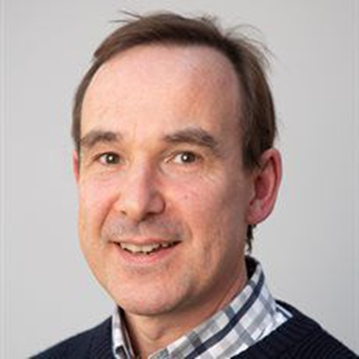 Professor John Snaith, University of Birmingham Tickets needed - Teachers should email the WMCTC Chair (Jill Oldfield) ( wmctcchair@gmail.com) giving your name and school and the number of tickets required. |
|
"A-level Revision: Mathematics in Sixth Form Chemistry: Building Confidence"  Dr Maryjane Tremayne, University of Birmingham Dr Maryjane Tremayne teaches on a number of undergraduate modules including thermodynamics, kinetics, computational chemistry, organic molecular materials and solid state techniques. She has also taught 'mathematics for chemists' for a number of years and established a new online fundamental maths for chemists module involving a range of innovative approaches to e-assessment and feedback for students. This presentation will focus on revising some of the key mathematical skills required for A-Level Chemistry. This will include skills and topics such as calculating and converting units, significant figures, decimal places, standard form, the Avogadro number, percentage yields, calculations using algebra, logarithmic functions, using and constructing graphs to determine chemical quantities, determining uncertainties and the Arrhenius expression. A range of example questions will be shown, demonstrating the use of some of the key skills outlined above. The presentation will also include a brief illustration of how mathematical concepts such as trigonometry and calculus are key extensions to undergraduate chemistry. Maryjane is a Lecturer in Physical and Structural Chemistry and has research interests in organic solid state chemistry, molecular crystallography, powder diffraction and evolutionary algorithms. She has published over 40 research papers in scientific journals and books, and solved over 50 molecular crystal structures from powder diffraction data following the development of new techniques for determination. She has given presentations around the world on both structure solution from powder diffraction data and the application of evolutionary algorithms to crystallography. Tickets needed - Teachers should email the WMCTC Chair (Jill Oldfield) ( wmctcchair@gmail.com) giving your name and school and the number of tickets required. |